Tag Archives: audio-technica

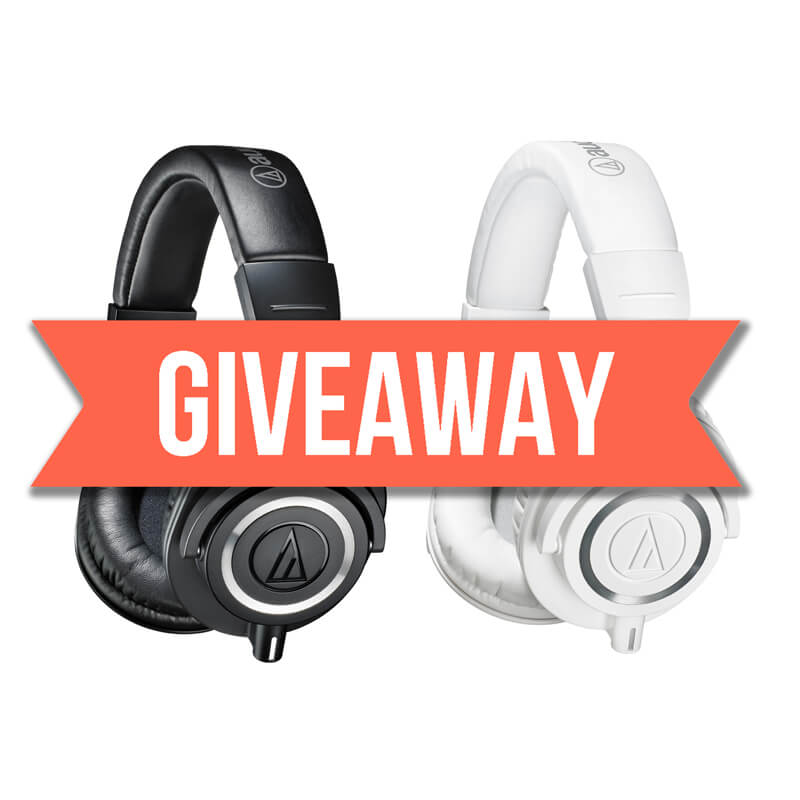
Win an Audio-Technica Prize Package (Round 2)!

Our good friends at Audio-Technica are awesome. How awesome, you ask?

Well, last month they gave away a prize pack to our readers consisting of the AT2020USB+ Cardioid Condenser USB Microphone and ATH-M30 headphones.

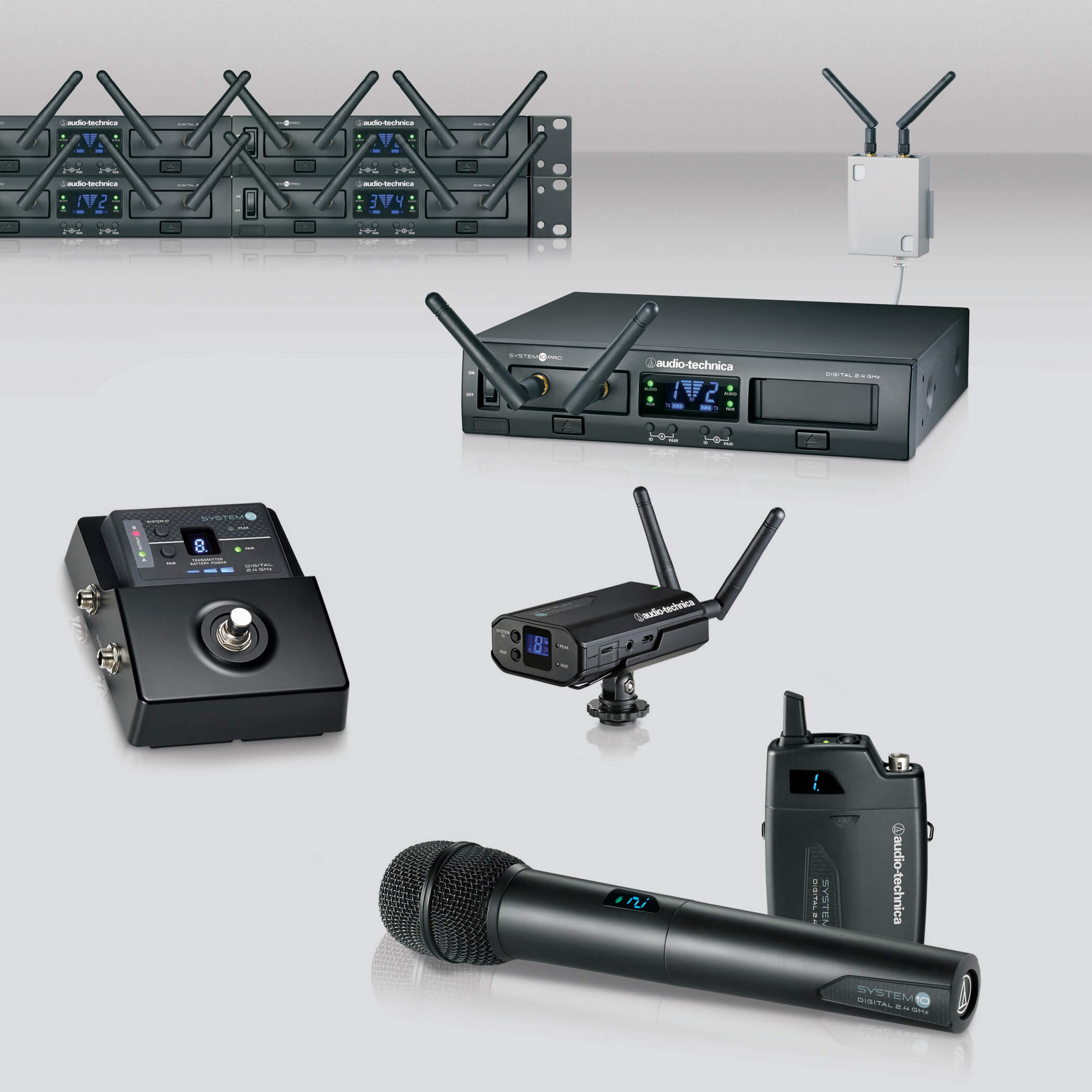
This time around, for the 2nd giveaway, the winner gets a choice of the System 10 ATW-1102 handheld system, or System 10 ATW-1101/G body-pack guitar/instrument system:

-ATW-1102 (receiver and handheld microphone/transmitter)

-ATW-1101/G (UniPak transmitter with AT-GcW guitar/instrument input cable)

Wanna win? Simple – just enter a comment below before July 31, 2013 and you’re automatically entered to win. Multiple comments won’t raise your chances, and the winner must be from the continental United States.

Good luck!

Win an Audio-Technica Prize Package!

atOur good friends at Audio-Technica are awesome. How awesome, you ask? So awesome they’re giving away a bunch of free gear to our readers over the next few months.

Up first is a prize pack consisting of the AT2020USB+ Cardioid Condenser USB Microphone and ATH-M30 headphones. Suffice to say, we’ve tested them out and they’re both amazing! (look for our full reviews soon)

Wanna win this combo? Simple – just enter a comment below before May 31, 2013 and you’re automatically entered to win. Multiple comments won’t raise your chances, and the winner must be from the continental United States.

Good luck!

Audio-Technica ATH-ANC27 QuietPoint Noise-Canceling Headphones

PROS: Great sound, many applications, low price, carrying case.

CONS: Requires battery for noise canceling.

PRICE: $99

A lot of the times, especially in pro studios, outside noise and distractions aren’t a huge issue when recording, as studios are soundproofed to protect against such nuisances. But for home recorders, this isn’t always an option (or practical). Enter AT’s new QuietPoint Noise Canceling Headphones, a steal at just $99, which offer the comfort and excellent sound quality Audio-Technica is known for, now in a quieter package. When the noise-canceling switch is activated (one AAA battery is required for active noise canceling; without a battery the headphones still operate passively without noise reduction employed), all outside sounds disappear and what you’re left with is simply the music.  Continue reading

Tour Van Survival Guide

Prepare for Unexpected Bumps on the Road

Going out on tour for the first time can be fun and exciting, but there are some important things to keep in mind before piling into the van and hitting the open road. While we live in an age of modern conveniences, we often forget that technology isn’t perfect and can fail when you least expect it. Plus, not all parts of the country are as cell phone friendly or tech-savvy as the major metro hubs we might be used to.

With that in mind, here are some analog relics (and a few digital toys) that will make life on the road easier in case you run into a few bumps along the way.

AAA Card

Yep, the trusty AAA Membership – well worth the annual fee of about $50 in most areas. The card can not only help you get out of a jam if the tour van gets a flat tire, it also covers the driver no matter what vehicle they are in. 100 miles of free towing is typically included in the membership price – enough to get to a service center if you break down in the middle of nowhere. Plus, the basic membership gets you discounts on hotels, motels, meals, shopping and other items you might need on tour. Finally, many auto insurance policies offer discounts if you’re a member.

Water

Before hitting the road, stock up on water. You can plan the route down to the mile, but you can’t plan for traffic, accidents and other fun diversions that might take you off course. Staying properly hydrated is an important part of staying healthy on the road, especially when several band members are traveling in such tight quarters for weeks at a time. Always have a full case or two of bottled water in the back of the van for basic drinking purposes and emergencies. Stock up at local convenience stores along the way as your supply gets low.

Cash

Remember cash? Yeah, we know, everyone has a debit and/or credit card these days. But guess what? That small-town diner near the club you’re playing (perhaps the only eatery in town) doesn’t take cards, and there’s no ATM in sight. A surprising amount of small businesses in Anytown, USA are cash-only, especially dining establishments and service-based industries. Have an inconspicuous stash of cash handy for the road, especially if you’re venturing into unfamiliar territories. It might be the difference between a hot meal and going hungry.

Emergency Contact Kit

No one thinks that anything bad will ever happen to them on the road. But the reality is, being prepared can make all the difference in the world. Each band member should prepare an envelope of emergency information, in the unlikely case that you get into an accident away from home and local authorities need to get in touch with your family or emergency contacts. Include a copy of your driver’s license, a list of emergency contacts, your home phone number and street address, and (most importantly) any relevant medical information that first responders would need in case you were incapacitated.

Road Atlas

Remember that AAA Card? Well, it can help you get a discount on a road atlas. “But I have a GPS in my phone!” you say. Believe it or not, coverage can be spotty on long stretches of highway, and if your battery goes kaput, you’ll be SOL, my friend. A traditional road atlas will provide you with the routes and highway info you need in case technology fails you, and will also include helpful travel hints and emergency phone numbers. Just don’t let the drummer try to navigate.

Extra Accessories (stands, cables, tape, strings, picks)

If you’re playing a hometown gig, you might be cool with letting another band on the bill share some gear and accessories – a mic stand, for example. On the road, playing with unfamiliar bands in unfamiliar settings, your stuff (no matter how hard you try, and how much you label it) will disappear. Keep the van stocked with extra mic stands, instrument stands, cables, tape, strings, picks, drum sticks, tuners, capos and any other small accessories that are easily stolen.

Laundry Detergent Packets

With limited van space, travel light. Pack enough clothes to get you through a few days max, but not enough for the whole trip. During stops en route to venues or while in town before a gig, hit up the local Laundromat and for the love of God, wash that damn Slayer shirt. Single-serve laundry detergent packs are cheap, and take up way less space than your entire wardrobe. Wash often, and you won’t have to lug space-hogging suitcases with you.

Quarters

Along with that stash of emergency cash, you should always have a roll or two of quarters packed away in the van. See the laundry situation above, and also remember the dead cell phone scenario. With a sleeping smart phone, you may need to revert to available pay phones in order to make emergency or business calls on the road. Many local bars, restaurants and service centers still have functioning pay phone banks. If all else fails and you need to make an emergency call, local bus terminals or train stations are a safe bet when in search of pay phones.

USB Microphone

So far, we’ve focused on the things that can go wrong. Preparedness is great in case of emergencies, but you’re supposed to be having fun, too! And if inspiration strikes while you’re in the van, a USB microphone can be a great tool to have; you can document the tour’s progress for your blog, you can record song ideas to your laptop, and you can record shows along the way to preserve memories. We fully recommend the Audio-Technica AT2020.

The road is a challenging, and sometimes cruel mistress. As much as going on tour with your friends sounds like nothing but a party, when you’re least expecting it, the unexpected can happen. Play it safe, and like the Boy Scouts say, “Be prepared.”

STEREO GUIDE: Put Together a Rockin’ System on a Budget

If you’re a musician, chances are you take great pride in carefully crafting your music, especially when you’re in the studio. So why are you still listening to your favorite tunes on tiny earbuds or the blown out computer speakers that came with your PC ten years ago? You want your music to be heard properly, so why not practice what you preach?

It’s time for an upgrade, and time to listen to music as it was meant to be heard – on a good stereo system. Now that audio retailers are a fading memory, and specialized stereo stores have gone the way of the 8-track, your best bet on a budget is to piece together quality used components. The golden age of stereo systems was the 1970s, and snatching a great piece of gear from that era is affordable, and will provide you a top-of-the-line listening experience at a rock bottom price. Here’s a quick guide to help you get started on your way to true audiophile heaven.

RECEIVER

The receiver is the heart of your system. It combines the switching capabilities and tone controls of a preamplifier, and adds a built in AM/FM tuner and amplifier to drive your speakers. Vintage receivers can be had for under $100, and are typically built like tanks. They should be, considering that they originally went for upwards of $1000, when adjusted for inflation. Ignore misleadingly low power ratings, as receivers in the 1970s and 1980s were rated differently, meaning an older 15-30 watt receiver have plenty of power to drive most speakers and fill a room with clean, crisp audio. Look for receivers that have enough inputs for your components – typically this will be at least TAPE IN, AUX, and PHONO (needed for a turntable). Lighted dials and brushed metal knobs on these old units complete the package and add a great aesthetic touch. When buying used gear, a little DeoxIT will clean up any scratchy or noisy pots, switches and knobs.

Recommended Brands: Harman/Kardon, Pioneer, Marantz, Yamaha, Kenwood, Realistic, Rotel, Sansui.

SPEAKERS

The most important link in the chain, your speakers will obviously be what shapes the sound you’re hearing. With receivers, vintage is the best way to go as far as value is concerned. With speakers, you might want to go new, or at least more recent to avoid having to refoam old, crumbling woofers and blown tweeters. If you were going to splurge on any aspect of your system, this would be the place to do it. You’ll need to decide whether you have the room for floor standing speakers, or if bookshelf models are the way to go. A nice pair of high-efficiency bookshelf speakers can deliver surprisingly good sound, and tight bass, in a very small enclosure.

Recommended Brands: Axiom Audio, Paradigm, Mirage, Polk Audio, JBL, Boston Acoustics.

HEADPHONES

When the neighbors start complaining, it’s time to throw on the cans. Headphones are an often-overlooked part of a stereo setup, but can also provide the most rewarding and enveloping experience, allowing you to fully tune out the world and get lost in the music. Over the ear models are recommended for the best quality. Look for headphones that can reproduce the entire audible spectrum from 20Hz~20kHz, and that are terminated with a 1/4” plug.

Recommended Brands: Grado, Audio-Technica, Sennheiser, AKG, Sony.

TURNTABLE

Spinning vinyl is a time-honored audiophile tradition that’s made a huge comeback in recent years. Used records can be scored on the cheap, and a good turntable will only enhance your listening experience. Look for models with standard mount headshells or tonearms, and not P-mount arms, as these tend to be lower quality, bottom of the barrel decks. Also look for belt drive manual systems, as they tend to be geared more towards true listening, and not DJ applications, like direct drive turntables. They also have fewer parts to break or interfere with vibrations from the stylus. Going vintage can save you some bread, so be on the lookout for older tables in good working order. Just don’t keep the cartridge/stylus that’s on it – who knows how old or worn it may be. As mentioned earlier, since turntables output a lower signal than CD players or cassette decks, a dedicated PHONO input is needed on your receiver to properly hook it up to your stereo. Otherwise, you’ll need to factor in the added cost of a PHONO preamp, which can set you back a pretty penny.

Recommended Brands: Technics, Dual, Rega, Denon, Yamaha, Music Hall, Project, Marantz, Realistic.

CARTRIDGE

The cartridge is what picks up the sound from the record grooves through the needle, or stylus, and sends that signal through your turntable’s tonearm, out to your receiver. Vintage is not an option here, as many manufacturers have stopped supporting older cartridges and replacement styli. The good news, though, is that new cartridges will last you decades, and you’ll only have to replace the stylus every 1,200 hours or so, as long as you keep it (and your records) clean. You can go nuts on $5,000 cartridges for your turntable, but for the budget-conscious, the Shure M97xe can be had for about $75, and is an absurd value. It offers amazing clarity and tracking ability for such a modest price. Again, look for standard mount cartridges, not P-mount.

Recommended Brands: Shure, Audio-Technica, Grado, Goldring, Ortofon, Sumiko, Stanton.

CD PLAYER

Avoid first generation players, which have notoriously bad (shrill) digital-to-analog converters, and whose laser assemblies tend to fail more often than second gen units and beyond. A solid audiophile CD player from the late 1980s should still work perfectly, and provide huge value for your buck. High-end decks from this era typically go for less than $40 on Craigslist and auction sites, so you’re sure to score a bargain. Check out thrift stores, as well, for great deals on stereo gear. Stick to single disc players, and not multi-disc or carousel units, which typically feature cheaper transports and are more prone to breakage over the years.

Recommended Brands: Denon, Sony, Technics, Marantz, Kyocera, Dual, NEC, Kenwood, Harman/Kardon, ADC, NAD, Nakamichi, Pioneer.

CASSETTE

Tapes, remember tapes? Sure you do, and cassettes have never been cheaper. Just look for the dustiest part of your local used record store, and staring you in the face should be hundreds of great albums for next to nothing. In fact, many people are willing to give away their old tapes, most of which still play just fine, if you have a solid deck to play them on. Plus, there’s nothing like a hand-made mix tape…actually on tape. Dual well decks will allow you to dub one tape to another, and also offer relay play, allowing you to listen to two complete cassettes in order without getting up. Look for 3-head decks if you can find them. You should have no trouble scoring a killer cassette deck for about $30-40, even units that once cost in the neighborhood of $500 and up. Your tape deck will use one of the tape inputs on your receiver. Having a hard time getting any audio? You may just need to press the TAPE MONITOR button the front of your receiver to select that input. Nakamichi is the king of the tape deck, and scooping up even one of their lower end models will allow you listen to your tapes at a higher quality than you ever thought imaginable.  While we aren’t covering reel-to-reel in this article, know that true audiophiles still claim it’s the purest format for true listening. That may be, but the investment required to maintain a good r2r machine, not to mention the insane price and rarity of pre-recorded tapes, can be a big turn off, even for big audiophiles.

Recommended Brands: Nakamichi, Denon, Marantz, Technics, Akai, Kyocera, Pioneer.

EQUALIZER

The redheaded stepchild of the stereo family, the EQ often gets a bad rep as being unnecessary or just something pretty to look at as the display bounces up and down. The truth is, in less-than-ideal room layouts, an EQ can help compensate for frequency problems due to odd walls, furniture or poor acoustics. Do so in moderation, though, as too much EQ can color the music in a way that was not intended by the artist. Lighting up your EQ with the old “rock and roll smile” pattern can be good for small rooms and low volume listening, but might not be ideal for all rooms; so tweak carefully. EQs will use up one of your receiver’s tape inputs, as you’ll be sending audio to it from the receiver after selecting the appropriate input you want to EQ (AUX, PHONO, FM, etc). You’ll then send the EQ’d audio back to the receiver through the tape return or TAPE IN input. Again, remember to engage the TAPE MONITOR button to hear the EQ’d audio. If you only have on tape input, and plan on using a cassette deck and EQ, most equalizers also include a tape in/out section that will allow you to daisy chain your tape deck and EQ.

Recommended Brands: Pioneer, Teac, Technics, ADC.

ADDITIONAL RESOURCES

AudiogoN: www.audiogon.com

Music Direct: www.musicdirect.com

Audio Karma Forums: www.audiokarma.org/forums

Jerry Raskin’s Needle Doctor: www.needledoctor.com

Oak Tree Vintage: www.oaktreevintage.com

Vintage Cassette: www.vintagecassette.com

GEAR GUIDE: Wireless Microphones


Intro

Once thought of as a luxury ticket item only available and affordable by major artists – a high-quality, clear, dependable wireless rig is now more accessible than ever. Popular among DJs, MCs, pop artists, houses of worship and with energetic performers for obvious reasons, wireless microphone systems have clearly apparent benefits with some not so apparent trade-offs. In addition to the standard set of metrics used for determining a live microphone’s quality (feedback rating, frequency response, etc) battery life, interference rejection, and number of channels are just a few things to consider when making the switch to wireless. With a wide variety of feature sets, and prices ranging anywhere from $150 -$2,000, we took a look at five reasonably priced, well-received mics that make for an excellent entry point.

Line 6 XD-V30

Most think of Line 6 as the company responsible for the POD and other guitar effects units, however Line 6 has jumped on the fast moving pro-sumer audio train with a handful quality recording and live audio products. Their XD series of wireless microphones is no exception. While it’s the least expensive mic reviewed, and also features far fewer channels than its competitors, the unit is absurdly simple to use (just one knob) and even features an Environment Filter to prevent feedback while providing a clean, reliable connection.


Sennheiser EW 115 G3 LE

If the number of available channels is a big differentiator, then look no further. With 1440 possible channels, Sennheiser’s offering beats the competition by more than 300! The EW 115 is also one of the two mics covered that has a rechargeable battery pack, meaning you won’t have to worry about not having an extra pack of Double As handy at your next gig. The unit features an integrated EQ to adapt to your environment, and the mic has interchangeable capsules should you want different polar patterns.


Audio-Technica ATW-2120a

Audio-Technica’s ATW series is an affordable, yet remarkably high quality line of wireless microphones. While this model only goes down to 100Hz, and the unit features far fewer channels than the Sennheiser, it’s impressive that they were able to fit a rechargeable battery pack into it at all. The specs indicate that the operating range of the mic is 300 feet, 200 feet more than the Line 6.


Electro-Voice RE2-410

EV, made wildly popular in the ’60s and ’70s for their workhorse dynamic microphones, offers a beast of a wireless rig with over 1000 channels. The 410 handheld mic has interchangeable capsules and features a one-touch mute button, eliminating the need to turn the unit off for silence. EV has added Digital Posi-Phase True Diversity to this model to ensure a clear, reliable signal. If this mic holds up like any of their iconic wired microphones, then rest assured it will come through gig after gig.


Shure SLX Beta58

Chances are, if you’ve ever been behind a microphone on stage, you’ve been behind a Shure SM58. The 58 is considered by most to be the gold standard by which all live vocal microphones are judged. Famous for its high SPL rating, fantastic feedback rejection, and being built like a tank, the 58 is not only inexpensive, but will last a lifetime and sound as it did the day it was purchased (even after being dropped, spit on, hit with drumsticks, etc). The SLX Beta58 is Shure’s attempt to take the 58, improve the specs, and make it wireless. With nearly 1000 channels, interchangeable cartridges, and audio reference companding isolation, the SLX is an excellent option for those demanding superior reliability, longevity, and quality.

Conclusion

While there is undoubtedly a wireless microphone on the market that fits your needs, investing in your own microphone to use live, especially a wireless, is a decision that should be well thought out. If you’re going to be holding the microphone in your hand, go to your local music store and actually hold the microphone in your hand. Are there buttons that get in the way? Is it heavy? Does it feel natural to hold? If the mic will be used for DJing, or on a podium of sorts, what is the largest venue you anticipate performing in? What is the microphones distance rating? Are there enough channels or frequency bands to combat potential interference? These are just a few questions you should ask yourself when considering making the move to wireless.

by David Pier

GEAR GUIDE: Quality Headphones


In a world where in-ear buds have increasingly become the headphone of choice for the average music listener, there still remains a need for over-the-ear cans. While definitely the more portable option, the damage that in-ear buds can cause is irreparable. Over the ear headphones are not only a safer option in many cases, they also tend to have a better frequency response than in-ears do for a variety of reasons.  Not only does the larger area allow for a better frequency response, there is physically more room in the larger headphones to allow for more components to be used.

What does one look for in a good set of headphones?  Is it more important to have a flat frequency response or do you want more highs or lows?  Open back or closed back?  These are just a few of the questions that have been argued amongst musicians, engineers and of course, the average listener.  As with most things in the world of music, there is no one “right” answer. There are only guidelines and humble opinions on why a certain pair of headphones is a better choice over another pair.

Perhaps the most important question to answer in the first place is for what purpose the headphones will be used. For this particular special, we’ll compare five pairs of headphones and how they fit not only into the world of general music listening but also the realm of at-home mixing.

For the home studio or avid music listener, there is a fine line between hype and what is actually audible. Each and every pair of headphones discussed has their pros and cons.  Don’t neglect the comfort level of each of these. If long listening or mixing sessions come up, the comfort factor can play an increasingly important role. Our suggestion, as with any purchase, is to do your homework and get on the blogs and read up on as many reviews and opinions as you can. Narrow down your selection to at most three, but ideally two items and try to go into a retail shop and actually listen and try them out. There are a million people out there with a million different opinions, but in the end, it’s your ears that will do the listening.


AKG K 271 MKII

Perhaps the most comfortable of all the headphones on this list, the AKG K 271 MKII also provide a very wide range in terms of frequency response.  Extending beyond the audible frequency a person’s own ears are capable of plays an important role in what headphones the at-home engineer selects.  One cannot EQ what one cannot hear.  Thanks to the design of this model, the listener gets isolation from the outside world while still maintaining a smooth, relatively open sound for closed back headphones.  Being able to collapse these headphones is another major plus and allows for easy portability.  In the mobile engineer’s world, who might have a tracking session at one facility during the day with plans to mix the single at home that night, this portability goes a long way.  The comfort becomes a factor for those long nights spent mixing a tune or for that 11 hour flight from Chicago to Moscow that you just can’t fall asleep on.  The AKGs are a versatile option for the bedroom engineer and avid music listener.


Grado SR225i

As the only open back headphones on this comparison list, the Grado SR225i models do have a slight edge in the overall listening experience.   For obvious reasons (they are open back headphones, after all) the Grados are the most open sounding headphones of all five demo’d.  Most producers and engineers agree that the open back provides a sound that’s similar to what one would hear in a room listening to speakers. For the home mix studio or even general listening, this “open sound” should play a major role in selecting the SR225i cans as part of your setup.  By having a similar vibe to what the musicians and their producer(s) had when making mixing decisions, the Grados will allow the listener to come closer to experiencing the song as the artist intended.  In our humble opinion, these have perhaps the smoothest and most detailed frequency response of all the headphones being discussed.  Perhaps what we love even more than the open sound is the feel of the foam material that lines the ears when wearing these retor-looking headphones.


One drawback to these headphones against the others, however, occurs in a headphone-monitoring situation.  As with almost all open back headphones, they will bleed into the microphone, especially with a vocalist.  A drummer will also have to crank this pair since some of the live drum sound will bleed its way into the headphones as well.  Fantastic for general listening and equally as good of a choice for mixing, one should use the Grados with caution while monitoring.


Audio-Technica ATH-M50

From microphones to headphones, Audio-Technica is a company that makes durable, long lasting products.  The ATH-M50s are no exception.  For the proud new owner of an Mbox or any other home studio interface, the M50s provide a great transition into mixing and listening on headphones.  The extended high frequency range seems to actually provide a nicer, low end. This may be due to sub-harmonics or it may be that the low end extends to 15 Hz.  Not only is there a nice big low end, the high frequencies are very natural and open sounding.  While not quite as detailed as the other headphones on this list, the ATH-M50s are a perfect blend of home listening and home tracking headphones. The padding is comfortable, allowing for long listening or mix sessions.  Outside noise is almost completely blocked out, making it much easier to tell your fiancée, roommate or anyone else yelling at you to stop the insanity – you REALLY could not hear them from the home studio.


Sennheiser HD 380 Pro

The funky angle of the cups against the headband of the HD 380 Pro headphones took us by surprise the first time we saw and used these headphones.  Once we got past this design quirk, we were itching to see what all the hype around E.A.R was.  To our surprise, the promise of a decreased comb filter effect and distortion was no lie.  It was hard to tell if it was the increased low-end response or the lack of comb filtering that provided what felt like a surprisingly detailed low and low mid frequency response.  Being careful not to do damage to our ears, we took a very loud source and put the output up louder and louder and really had to crank these before we were able to get any distortion.  Clarity of the signal and the ability to get loud without distorting were the two things that really stuck out for us while using the HD 380 PROs. The issue with loud volumes is that the detail tends to get lost as one increases volume. Louder may not always mean better, but it almost always is preferred.


Sony MDR-7509HD

With a frequency response ranging from 5Hz (yes 5) to 80kHz, the Sony MDR-7509HDs have the widest frequency range of the headphones being discussed. What does this really mean?  It means that anything the human ear can hear is audible on these. As one would imagine, minute nuances are audible when wearing these headphones.  Clarity, comfort and portability make these perhaps the most impressive headphones on this list for the money.  As musicians wearing these while tracking, we find that we sometimes will tell the engineer that the tone of what is being recorded still needs tweaking. Nine times out of ten, we’re right. Be careful what you wish for and who you let wear these while tracking or you may find yourself moving microphones, tweaking tones or trying different amps for much longer than necessary.  In the home studio where one not only listens back and does mixing, but also needs headphones while tracking drums, bass, guitar or any other loud source, the Sony MDR-7509HDs allow for accurate monitoring while still blocking unwanted noise.

Jeff Leibovich is a sales representative for Vintage King Audio, a leading dealer of high-end new and vintage recording equipment.  Representing esoteric rarities and major products alike, Leibovich’s experience allows him to take a “hands on” approach when comparing gear for editorial purposes.  More info can be found at vintageking.com.


Gear Guide: In-Ear Monitors


Get the Perfect Stage Mix Every Time

The worst experience a singer can ever have is playing a live show in front of hundreds or thousands of people and not being able to hear their vocals. Even drummers can have a hard time staying on a steady beat without a metronome blasting in their ears. In-ear monitors have become an essential tool to help create a flawless performance for the fans. With so many choices available in your local music shop, it can be hard to pick out the right one for your specific needs. Since relying on venue floor monitors can sometimes lead to disaster and cranky musicians, what type of in-ear monitors are right for the average musician?


When shopping for in-ear monitors, a musician has to consider important features that may impact their pocket, but in the end will provide a quality product built for longevity. Range, inputs, volume output, comfort, and battery life are all among the features that need to be considered. Common models at local retailers may seem just what a singer may need, but in reality may be better suited for a drummer or guitarist.


Galaxy Audio AS-900 Wireless Personal Monitor System

Frequencies are very important in in-ear monitors. These systems usually run on UHF channels (yes like the ones on televisions). While most in-ear monitors allow you to scan to find the best channel to avoid static from interfering frequencies, the Galaxy Audio AS-900 only provides one frequency. The possibility of scanning for a clear sound if the user experiences static is impossible. This helps the system stay at a lower price point for those who want a basic in-ear system. The user may also want to utilize this system in a smaller venue as the range between the body pack and the system itself is between 100-150 feet. Two AA batteries will do the trick for the pack for about five hours, of course that is depending on how loud the volume is during usage. At louder levels not only is more battery life consumed, but distortion may be heard from peaking due to the fact that this device does not have a limiter. Like most monitor systems this is an XLR and ¼” input combo. This product is great for entry-level musicians playing smaller gigs or for a drummer who just needs to hear a basic click track. Galaxy also offers the next step up, the AS-1100, for those musicians who wish to have a variety of channels to choose from to avoid frequency interference.


Nady PEM – 500 Wireless Personal Monitor System

This level of the Nady product is hard to come by at retail stores, but still available. This is an inexpensive product that can be used as a click track or vocal monitor. Guitar frequencies become a little more jumbled as the mix becomes more complex, but the unit can be switched to a stereo or mono signal, which is nice. The system has a limiter, which is very important because it prevents horrible distortion that can occur at high volumes. The range between the body pack and the system can be up to 300 feet assuming the system is not behind a concrete isolated sound booth. There are 16 different UHF channels to choose from which makes it very reliable in mostly any setting.  This model has XLR and ¼” inputs, as well as a headphone output in the front. The body pack lets you know when the six hours of battery life are almost drained with an LED indicator. When the pack blinks red, have a 9V handy. The only downside to this system is the pair of uncomfortable ear buds it comes with. The casing to enclose the system is great, but if mishandled can crack at the hinges which can cause unwanted damage to a dropped monitor system! Not to worry though, Nady is known for having a receptive customer service department that can help replace or repair damaged product with a fast turn around.


Audio Technica M2 Wireless Personal Monitor System

With 100 selectable UHF channels, it is nearly impossible to ever have a frequency interference problem with this monitor system. The body pack is light like its competitors but offers more comfortable and durable ear buds. With eight hours of battery life on two AA batteries, it is not hard to see why this model starts at a higher price point. This is perfect for the gigging musician. With three different types of settings for stereo, mono, and mix, this is ideal even for the guitarist who wants to keep up accurately with the drummer without getting his or her hearing drowned out by blaring symbols and vocals.  This is also great for musicians who use backing tracks and would like to individually listen to them while jamming to make sure they keep in time. A drummer can easily hook up his own laptop with a click track program or metronome with the 3.5mm line in input. The best feature is that several body packs can receive the same signal with individual body pack option of stereo, mono, or mix.


AKG IVM 4 Wireless Personal Monitor System

With this wireless system, you get what you pay for. For the high price point, this is for the serious musician.  With 1200 frequencies to choose from, and a preprogrammed bank, this is just the beginning of what this monitor has to offer. This beautiful system has an EQ, limiter, automatic frequency environment scan, high isolation ear buds, and the best part – up to 10 hours of battery life on the body pack! Large or small venue, it does not matter when it comes to this model, a crystal clear signal is guaranteed even when dealing with other complex signals in the area. The only downside is the bulky antenna that can easily get tangled in clothing, or get uncomfortable while performing. The antenna issue is well worth getting over when you have a product this powerful. This one may need to be special ordered at some retailers.


Sennheiser EW300 IEM G3 Wireless In-Ear Monitor System

From the company that brings you world-class microphones and headphones comes the EW300 G3 series in-ear monitor.  Much like the AKG model, what sets this in-ear monitor system apart from the competition is the availability to remotely control the system from a computer. Unless a musician is playing a major venue, or has an extremely high tech sound engineer, this function may not prove useful for your needs. On a professional level though, it can become very advantageous as now a complete and accurate mix can be delivered to all parties with body packs linked to the system. The receiver has a 5-band equalizer, HDX Compander for a crisp sound, 1680 frequencies, and a variety of pricey accessories to add on to the system. The accessories range from rechargeable batteries to signal boosters. The same bulky antenna issue as the AKG is applicable to this device.

Parting Thoughts

Depending on the level of quality, these devices start at $200 and go up into the $1000 price range.  From personal experience with these in-ear monitors as a musician myself, and trying them out at the prestigious NAMM convention in California, I can assure any musician that the need to spend $500+ on an in-ear monitor system should be considered only if you are a seriously touring and gigging on a regular basis. A drummer may want to stick to a Nady in-ear monitor system, as it provides flawless sound, even with backing tracks running through them. A guitarist may want to consider an Audio Technica only if floor monitors are not feasible, and the same goes for any other instrumentalists. Both Audio Technica and Sennheiser in-ear monitors are great for vocalists because they provide impeccable accuracy when it comes to sound. What a vocalist may want to consider is getting better ear buds, as most of the buds provided with the systems are very uncomfortable. Molded ear buds should be considered from non-retail store brand, Ultimate Ears – another pricey but high quality in-ear monitor company.


So next time you go to your local music shop in search of in-ear monitors, keep in mind the basics. What is the level of the project and what type of artist are you in terms of professionalism, touring, etc.? Remember the better the quality of the product, the higher the price. Compare and research the features and see what better suits your individual needs. When it comes to in-ear monitors, your perception of clarity is the key!