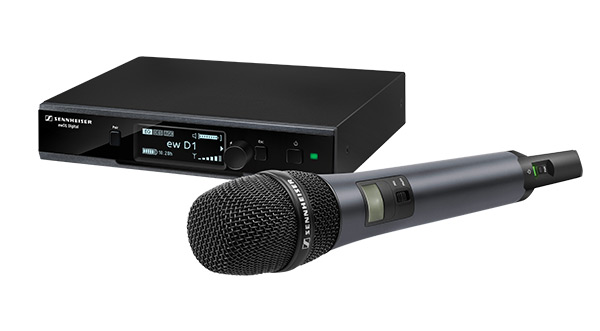
Tag Archives: Sennheiser

Sennheiser Partners with UniqueSquared to Bring Mobile Studio to Austin During SXSW

Audio specialist Sennheiser announced that it has partnered with music retailer UniqueSquared to bring a 45-foot mobile recording studio bus to Austin during its world-famous music week between March 14th and 16th.  The UniqueSquared Mobile Studio, which will make stops at various locations in downtown Austin during its music festival, is being co-sponsored by Sennheiser and features a control room, isolated vocal booth / tracking room, a listening lounge and plenty of gear from Sennheiser and Neumann. Music fans are encouraged to attend and admission is free.

The UniqueSquared Mobile Studio will feature an assortment of world-class microphones from Sennheiser and Neumann and several dedicated listening stations equipped with a selection of the latest headphones from Sennheiser — including the HD 800, which many audiophiles consider to be the best-sounding headphone in the world. Following is a selection of the audio equipment that the mobile recording studio will have on hand for musicians and fans to demo:

-Sennheiser e 906, e 914 and MK 4 instrument / vocal microphones
-Sennheiser e 835 and e 935 dynamic vocal microphones
-Neumann TLM 103 condenser microphone
-Sennheiser Amperior, HD 25, HD 205, HD 280, HD 650,HD 800 headphones and others
-TRUE Systems P2 Analog preamplifier (distributed by Sennheiser)

“We are happy to co-sponsor the UniqueSquared Mobile Studio this year in Austin,” commented Tim Moore, artist relations manager, Sennheiser. “It is exciting to interact with so many diverse music fans in one place, and the Mobile Studio enables them to try out a wide range of Sennheiser and Neumann products in a professional environment before making a purchasing decision.”

The UniqueSquared Mobile Studio, which will also have products for sale, is being presented in conjunction with the Sennheiser / Paste party at The Stages on Sixth — where 33 artists will perform over the course of three days.

Over the course of the showcase event, one pair of Sennheiser HD 800 headphones will be given away each day to three lucky registered showcase attendees and hundreds of cards will be given away featuring free music downloads of Sennheiser artists. A dedicated, interactive listening station will be provided for the duration of the event so music fans can experience Sennheiser’s latest products including the Amperior DJ-style headphones, which were recently unveiled at CES 2012.

GEAR GUIDE: Wireless Microphones


Intro

Once thought of as a luxury ticket item only available and affordable by major artists – a high-quality, clear, dependable wireless rig is now more accessible than ever. Popular among DJs, MCs, pop artists, houses of worship and with energetic performers for obvious reasons, wireless microphone systems have clearly apparent benefits with some not so apparent trade-offs. In addition to the standard set of metrics used for determining a live microphone’s quality (feedback rating, frequency response, etc) battery life, interference rejection, and number of channels are just a few things to consider when making the switch to wireless. With a wide variety of feature sets, and prices ranging anywhere from $150 -$2,000, we took a look at five reasonably priced, well-received mics that make for an excellent entry point.

Line 6 XD-V30

Most think of Line 6 as the company responsible for the POD and other guitar effects units, however Line 6 has jumped on the fast moving pro-sumer audio train with a handful quality recording and live audio products. Their XD series of wireless microphones is no exception. While it’s the least expensive mic reviewed, and also features far fewer channels than its competitors, the unit is absurdly simple to use (just one knob) and even features an Environment Filter to prevent feedback while providing a clean, reliable connection.


Sennheiser EW 115 G3 LE

If the number of available channels is a big differentiator, then look no further. With 1440 possible channels, Sennheiser’s offering beats the competition by more than 300! The EW 115 is also one of the two mics covered that has a rechargeable battery pack, meaning you won’t have to worry about not having an extra pack of Double As handy at your next gig. The unit features an integrated EQ to adapt to your environment, and the mic has interchangeable capsules should you want different polar patterns.


Audio-Technica ATW-2120a

Audio-Technica’s ATW series is an affordable, yet remarkably high quality line of wireless microphones. While this model only goes down to 100Hz, and the unit features far fewer channels than the Sennheiser, it’s impressive that they were able to fit a rechargeable battery pack into it at all. The specs indicate that the operating range of the mic is 300 feet, 200 feet more than the Line 6.


Electro-Voice RE2-410

EV, made wildly popular in the ’60s and ’70s for their workhorse dynamic microphones, offers a beast of a wireless rig with over 1000 channels. The 410 handheld mic has interchangeable capsules and features a one-touch mute button, eliminating the need to turn the unit off for silence. EV has added Digital Posi-Phase True Diversity to this model to ensure a clear, reliable signal. If this mic holds up like any of their iconic wired microphones, then rest assured it will come through gig after gig.


Shure SLX Beta58

Chances are, if you’ve ever been behind a microphone on stage, you’ve been behind a Shure SM58. The 58 is considered by most to be the gold standard by which all live vocal microphones are judged. Famous for its high SPL rating, fantastic feedback rejection, and being built like a tank, the 58 is not only inexpensive, but will last a lifetime and sound as it did the day it was purchased (even after being dropped, spit on, hit with drumsticks, etc). The SLX Beta58 is Shure’s attempt to take the 58, improve the specs, and make it wireless. With nearly 1000 channels, interchangeable cartridges, and audio reference companding isolation, the SLX is an excellent option for those demanding superior reliability, longevity, and quality.

Conclusion

While there is undoubtedly a wireless microphone on the market that fits your needs, investing in your own microphone to use live, especially a wireless, is a decision that should be well thought out. If you’re going to be holding the microphone in your hand, go to your local music store and actually hold the microphone in your hand. Are there buttons that get in the way? Is it heavy? Does it feel natural to hold? If the mic will be used for DJing, or on a podium of sorts, what is the largest venue you anticipate performing in? What is the microphones distance rating? Are there enough channels or frequency bands to combat potential interference? These are just a few questions you should ask yourself when considering making the move to wireless.

by David Pier

GEAR GUIDE: Quality Headphones


In a world where in-ear buds have increasingly become the headphone of choice for the average music listener, there still remains a need for over-the-ear cans. While definitely the more portable option, the damage that in-ear buds can cause is irreparable. Over the ear headphones are not only a safer option in many cases, they also tend to have a better frequency response than in-ears do for a variety of reasons.  Not only does the larger area allow for a better frequency response, there is physically more room in the larger headphones to allow for more components to be used.

What does one look for in a good set of headphones?  Is it more important to have a flat frequency response or do you want more highs or lows?  Open back or closed back?  These are just a few of the questions that have been argued amongst musicians, engineers and of course, the average listener.  As with most things in the world of music, there is no one “right” answer. There are only guidelines and humble opinions on why a certain pair of headphones is a better choice over another pair.

Perhaps the most important question to answer in the first place is for what purpose the headphones will be used. For this particular special, we’ll compare five pairs of headphones and how they fit not only into the world of general music listening but also the realm of at-home mixing.

For the home studio or avid music listener, there is a fine line between hype and what is actually audible. Each and every pair of headphones discussed has their pros and cons.  Don’t neglect the comfort level of each of these. If long listening or mixing sessions come up, the comfort factor can play an increasingly important role. Our suggestion, as with any purchase, is to do your homework and get on the blogs and read up on as many reviews and opinions as you can. Narrow down your selection to at most three, but ideally two items and try to go into a retail shop and actually listen and try them out. There are a million people out there with a million different opinions, but in the end, it’s your ears that will do the listening.


AKG K 271 MKII

Perhaps the most comfortable of all the headphones on this list, the AKG K 271 MKII also provide a very wide range in terms of frequency response.  Extending beyond the audible frequency a person’s own ears are capable of plays an important role in what headphones the at-home engineer selects.  One cannot EQ what one cannot hear.  Thanks to the design of this model, the listener gets isolation from the outside world while still maintaining a smooth, relatively open sound for closed back headphones.  Being able to collapse these headphones is another major plus and allows for easy portability.  In the mobile engineer’s world, who might have a tracking session at one facility during the day with plans to mix the single at home that night, this portability goes a long way.  The comfort becomes a factor for those long nights spent mixing a tune or for that 11 hour flight from Chicago to Moscow that you just can’t fall asleep on.  The AKGs are a versatile option for the bedroom engineer and avid music listener.


Grado SR225i

As the only open back headphones on this comparison list, the Grado SR225i models do have a slight edge in the overall listening experience.   For obvious reasons (they are open back headphones, after all) the Grados are the most open sounding headphones of all five demo’d.  Most producers and engineers agree that the open back provides a sound that’s similar to what one would hear in a room listening to speakers. For the home mix studio or even general listening, this “open sound” should play a major role in selecting the SR225i cans as part of your setup.  By having a similar vibe to what the musicians and their producer(s) had when making mixing decisions, the Grados will allow the listener to come closer to experiencing the song as the artist intended.  In our humble opinion, these have perhaps the smoothest and most detailed frequency response of all the headphones being discussed.  Perhaps what we love even more than the open sound is the feel of the foam material that lines the ears when wearing these retor-looking headphones.


One drawback to these headphones against the others, however, occurs in a headphone-monitoring situation.  As with almost all open back headphones, they will bleed into the microphone, especially with a vocalist.  A drummer will also have to crank this pair since some of the live drum sound will bleed its way into the headphones as well.  Fantastic for general listening and equally as good of a choice for mixing, one should use the Grados with caution while monitoring.


Audio-Technica ATH-M50

From microphones to headphones, Audio-Technica is a company that makes durable, long lasting products.  The ATH-M50s are no exception.  For the proud new owner of an Mbox or any other home studio interface, the M50s provide a great transition into mixing and listening on headphones.  The extended high frequency range seems to actually provide a nicer, low end. This may be due to sub-harmonics or it may be that the low end extends to 15 Hz.  Not only is there a nice big low end, the high frequencies are very natural and open sounding.  While not quite as detailed as the other headphones on this list, the ATH-M50s are a perfect blend of home listening and home tracking headphones. The padding is comfortable, allowing for long listening or mix sessions.  Outside noise is almost completely blocked out, making it much easier to tell your fiancée, roommate or anyone else yelling at you to stop the insanity – you REALLY could not hear them from the home studio.


Sennheiser HD 380 Pro

The funky angle of the cups against the headband of the HD 380 Pro headphones took us by surprise the first time we saw and used these headphones.  Once we got past this design quirk, we were itching to see what all the hype around E.A.R was.  To our surprise, the promise of a decreased comb filter effect and distortion was no lie.  It was hard to tell if it was the increased low-end response or the lack of comb filtering that provided what felt like a surprisingly detailed low and low mid frequency response.  Being careful not to do damage to our ears, we took a very loud source and put the output up louder and louder and really had to crank these before we were able to get any distortion.  Clarity of the signal and the ability to get loud without distorting were the two things that really stuck out for us while using the HD 380 PROs. The issue with loud volumes is that the detail tends to get lost as one increases volume. Louder may not always mean better, but it almost always is preferred.


Sony MDR-7509HD

With a frequency response ranging from 5Hz (yes 5) to 80kHz, the Sony MDR-7509HDs have the widest frequency range of the headphones being discussed. What does this really mean?  It means that anything the human ear can hear is audible on these. As one would imagine, minute nuances are audible when wearing these headphones.  Clarity, comfort and portability make these perhaps the most impressive headphones on this list for the money.  As musicians wearing these while tracking, we find that we sometimes will tell the engineer that the tone of what is being recorded still needs tweaking. Nine times out of ten, we’re right. Be careful what you wish for and who you let wear these while tracking or you may find yourself moving microphones, tweaking tones or trying different amps for much longer than necessary.  In the home studio where one not only listens back and does mixing, but also needs headphones while tracking drums, bass, guitar or any other loud source, the Sony MDR-7509HDs allow for accurate monitoring while still blocking unwanted noise.

Jeff Leibovich is a sales representative for Vintage King Audio, a leading dealer of high-end new and vintage recording equipment.  Representing esoteric rarities and major products alike, Leibovich’s experience allows him to take a “hands on” approach when comparing gear for editorial purposes.  More info can be found at vintageking.com.


New Gear From Winter NAMM 2011

SHURE // PSM 1000

Coming Spring 2011

This personal monitoring system is slimmed down and easy to handle. With up to 72 MHz of tuning bandwidth and a slim bodypack, a reliable signal won’t be hard to pick up. The system features a full single rack and dual channel transmitter, making it more than just a pretty piece of equipment.


CAD Audio // U9 MiniMic

$39

The latest from CAD Audio, the U9 is a small, easy to use USB microphone that is indeed, mini. At only a few inches, the U9 has a headphone jack, an LED that signals when the mic is active, and a microphone that swivels to allow easy recording wherever you are.


Orange Amplifiers // DIVO TubeSync

Orange found a way to make the tube amp better. DIVO monitors your amps output and adjusts the bias accordingly, maximizing every tube’s potential. It also runs in circuit tests to increase the life of your amp.


DigiTech // Guitar and Bass Amps

$79.95-$2399.95 – Spring 2011

DigiTech is expanding into amplifiers. These are more than just some “me too!” products, rather they come fully stocked with DigiTech’s famous modeling and effects software. From small 15W to full 150W stacks, these amps will provide the greatest control over your sound.


Blue Microphones // Reactor

$499

Spring 2011


Blue’s latest condenser mic is designed to give you versatility and control, with a rotating head and noiseless switching between cardioid, omni, or bi-directional patterns. Made with the highest quality components, it makes high-end audio recording affordable.


DBZ Guitars // Z Glide Neck

$300

Dean Zelinksy, master guitar builder, hates that clammy feeling glossed guitar necks leave on your hand, so he re-designed the guitar neck. His necks have precisely engraved patterns on the back that repel sweat and give you an ultra-smooth, ultra-fast playing experience.


Sennheiser // CXC 700

Spring 2011

Sennheiser’s new earphones let you switch between three different noise-canceling modes to tailor the sound to your environment. Designed to be the perfect travel companions, they’re small and provide crystal clear audio reproduction.


TC Electronic // PolyTune 1.1

$4.99

The PolyTune made a splash when it was released last year, the first tuner that could tune separate strings simultaneously. The iPhone app takes the award-winning pedal and sticks it in your smart phone, so you can always have it with you.


Universal Audio // UAD-2 Satellite Duo and Quad

$899 +

Engineers and techies rejoice, Universal Audio has begun the inevitable phasing out of USB by introducing the UAD-2 Satellite Duo and Quad Firewire DSP accelerator packages. The package will give your DAW a boost and access classic analog recording emulations.


M-Audio // ProKeys Sono 88, ProKeys Sono 61, KeyStudio 49i

$549.95, $449.95, $299.95 respectively

These audio interface keyboards are the latest from Avid. The ProKeys Sono 88 has 88 semi-weighted, velocity-sensitive keys with a built-in USB interface that allows you to record directly to your computer. Its partner keyboards, the ProKeys Sono 61 and KeyStudio 49i, give you the same capabilities: the only difference is the key count.


Providence // PEC-04

Providence’s PEC-04 programmable effects controller has four programmable effects loops, giving you the ability to create and recall four difference loop combinations instantly. Each loop has an individual control. With premium footswitch spacing and an overload indicator, this controller is a must.


SKB // Keyboard Soft Cases

$129.99 – $179.99

These soft cases are tough and durable, carrying about as much protection as a hard case. With wood-framed walls and a completely padded interior, it provides ideal keyboard storage. These also include accessories storage so everything is where you need it, padded straps and wheels for easy travel, and rails on the back and sides for maximum loading and unloading protection.


Cakewalk // Sonar X1

The Sonar X1 user interface design is easy to navigate and makes your work more manageable. Using their Skylight technology, the new Sonar features has a fully collapsible, expandable and floatable control bar; an organized browser; an easy to use track inspector; and a multi-dock that allows you to view multiple screens at one time.


Ampeg // BA Series Combo Practice Amps and Heritage B-15

BA-108, $139.99; BA-110, $251.99; Heritage B-15, $5,999.99

Ampeg’s new BA series practice amps are compact and designed specifically for entry-level players. Coming in April 2011, they’ll feature an MP3 hookup, headphone out, and a lightweight design. Then at the other end of Ampeg’s spectrum is the Heritage B-15. Called “the holy grail of bass amplification,” this is a high-quality rig designed for superior performance.


Mackie // Onyx Blackjack and Blackbird

Blackjack $259.99, Blackbird $629.99

These new recording interfaces from Mackie are compatible with both Mac and Windows operating systems. The smaller of the two, the Blackjack features a compact desktop design and a USB interface. The larger Blackbird is set up with a FireWire interface for larger projects and speedier audio transfers.


JBL // LSR 2300 Series

$200 Monitor and Subwoofer, $300 Monitor System Controller

In-studio speakers, subwoofers, and a monitor controller make up this series, for which JBL has dropped the price but kept the essential features. Power efficient and durable, the monitors have low-distortion drivers and the subwoofer produces deep, resounding bass. The system controller is incredibly accurate, allowing you to produce great mixes no matter where you are.


Big Fish Audio // Audio Sample and Loop Kits

Big Fish has compiled more loops, sounds, and construction kits than you’d think were possible. Every variation and subgenre of music categories is represented here, with succinct yet extremely descriptive names. For these prices, it’s safe to say that you’ll be getting an exhaustive amount of original audio for your projects. Funky Gumbo? Quirky Guitars? Hip-hop India? Yes, please.


Alan Parsons // The Art And Science of Sound Recording

$149

Recording often seems like a complicated, convoluted monster of a process. Alan Parsons is here to help. He’s created an inclusive, detailed DVD course covering every aspect of the recording process, addressing the problems and questions that often plague artists while recording. The entire process is deconstructed, allowing artists to see that sound recording, much like music itself, is indeed an art and a science.

Sennheiser Offers Musicians a Chance to Make Their Mark in Austin

Sennheiser HearIAm Campaign

Audio specialist Sennheiser announces the final phase of its HearIAm initiative this March, as the innovative campaign for artists and fans sets its sights on the southwest’s hotbed of music: Austin, Texas. Sennheiser’s HearIAm campaign, which launched last spring and has since provided an abundance of opportunity for bands to play at prominent music festivals throughout North America, is now providing an exquisite showcase opportunity in Austin as well as $10,000 in music equipment to the winning band of the last phase.

Bands: Submit Your Music Now!

Austin’s brand new music hotspot, The Stage on Sixth, will be the place to be on the evening of March 18th as Sennheiser hosts a very special showcase event featuring critically acclaimed Brooklyn, NY-based Indie act The Antlers. The high-profile music showcase will also feature a deserving band that submitted their music on HearIAm.com and was subsequently selected as winner by music fans and a panel of accomplished judges.

In addition to capturing a coveted spot in the Austin showcase and $10,000 in music equipment from Sennheiser, the winning artist/band will also receive complimentary travel arrangements and accommodations while in Austin. Bands interested in participating should visit http://www.heariam.com, where they can register for the contest and upload their music tracks. The submission period for this contest will end on February 1st and the winner will be announced on February 25th.

When the HearIAm initiative wraps up this spring, the finalists from each phase will compete for a grand prize, which includes a 3-song recording with a major producer from Pick The Band, a distribution deal from Universal Republic Records and an A&R showcase at Universal Republic’s headquarters in New York. Musicians and fans from all over North America and Latin America are encouraged to participate in HearIAm. To learn more, please visit http://www.heariam.com.

HearIAm: An Impressive Track Record

Sennheiser launched HearIAm last spring in conjunction with PickTheBand.com and Universal Republic Records. Since then, many hundreds of bands from all over North America and Latin America have submitted their music to the site, and thousands of fans have participated to discover and share new music. Following is a brief description of some of the key milestones over the course of the campaign:

In August 2010, Sennheiser completed the first phase of HearIAm as Kansas City-based rock band Trucker performed at Montreal’s Osheaga 2010 festival alongside artists like Snoop Dogg and Sonic Youth.

In October 2010, Columbia’s The Hall Effect won the second phase of HearIAm, playing a fully attended showcase at New York City’s CMJ Music and Film Marathon.

In December 2010, Mexico’s Arquivolta won the third phase of HearIAm, performing in an exclusive, sold-out showcase for music fans in Mexico City.

On January 28, 2011, the winner of the fourth phase will be announced and provided with an opportunity to perform a coveted showcase during Toronto’s Canadian Music Week in March.

In April of 2011, the grand-winner of the HearIAm initiative will be announced and will receive a private A&R showcase and distribution deal from Universal Republic Records among other prizes.

“Our HearIAm initiative has been an incredible success due to overwhelmingly positive participation by both bands and fans,” commented Stefanie Reichert, vice president of strategic marketing, Sennheiser USA. “The final phase of our campaign in Austin — which occurs during one of the most important music festivals in North America — is another tremendous opportunity for a deserving band to get their music heard.”

About Sennheiser

Sennheiser is a world-leading manufacturer of microphones, headphones and wireless transmission systems. Established in 1945 in Wedemark, Germany, Sennheiser is now a global brand represented in 60 countries around the world with U.S. headquarters in Old Lyme, Connecticut. Sennheiser’s pioneering excellence in technology has rewarded the company with numerous awards and accolades including an Emmy, a Grammy, and the Scientific and Engineering Award of the Academy of Motion Picture Arts and Sciences.

You can find all the latest information on Sennheiser by visiting our website at http://www.sennheiserusa.com.

Gear Guide: In-Ear Monitors


Get the Perfect Stage Mix Every Time

The worst experience a singer can ever have is playing a live show in front of hundreds or thousands of people and not being able to hear their vocals. Even drummers can have a hard time staying on a steady beat without a metronome blasting in their ears. In-ear monitors have become an essential tool to help create a flawless performance for the fans. With so many choices available in your local music shop, it can be hard to pick out the right one for your specific needs. Since relying on venue floor monitors can sometimes lead to disaster and cranky musicians, what type of in-ear monitors are right for the average musician?


When shopping for in-ear monitors, a musician has to consider important features that may impact their pocket, but in the end will provide a quality product built for longevity. Range, inputs, volume output, comfort, and battery life are all among the features that need to be considered. Common models at local retailers may seem just what a singer may need, but in reality may be better suited for a drummer or guitarist.


Galaxy Audio AS-900 Wireless Personal Monitor System

Frequencies are very important in in-ear monitors. These systems usually run on UHF channels (yes like the ones on televisions). While most in-ear monitors allow you to scan to find the best channel to avoid static from interfering frequencies, the Galaxy Audio AS-900 only provides one frequency. The possibility of scanning for a clear sound if the user experiences static is impossible. This helps the system stay at a lower price point for those who want a basic in-ear system. The user may also want to utilize this system in a smaller venue as the range between the body pack and the system itself is between 100-150 feet. Two AA batteries will do the trick for the pack for about five hours, of course that is depending on how loud the volume is during usage. At louder levels not only is more battery life consumed, but distortion may be heard from peaking due to the fact that this device does not have a limiter. Like most monitor systems this is an XLR and ¼” input combo. This product is great for entry-level musicians playing smaller gigs or for a drummer who just needs to hear a basic click track. Galaxy also offers the next step up, the AS-1100, for those musicians who wish to have a variety of channels to choose from to avoid frequency interference.


Nady PEM – 500 Wireless Personal Monitor System

This level of the Nady product is hard to come by at retail stores, but still available. This is an inexpensive product that can be used as a click track or vocal monitor. Guitar frequencies become a little more jumbled as the mix becomes more complex, but the unit can be switched to a stereo or mono signal, which is nice. The system has a limiter, which is very important because it prevents horrible distortion that can occur at high volumes. The range between the body pack and the system can be up to 300 feet assuming the system is not behind a concrete isolated sound booth. There are 16 different UHF channels to choose from which makes it very reliable in mostly any setting.  This model has XLR and ¼” inputs, as well as a headphone output in the front. The body pack lets you know when the six hours of battery life are almost drained with an LED indicator. When the pack blinks red, have a 9V handy. The only downside to this system is the pair of uncomfortable ear buds it comes with. The casing to enclose the system is great, but if mishandled can crack at the hinges which can cause unwanted damage to a dropped monitor system! Not to worry though, Nady is known for having a receptive customer service department that can help replace or repair damaged product with a fast turn around.


Audio Technica M2 Wireless Personal Monitor System

With 100 selectable UHF channels, it is nearly impossible to ever have a frequency interference problem with this monitor system. The body pack is light like its competitors but offers more comfortable and durable ear buds. With eight hours of battery life on two AA batteries, it is not hard to see why this model starts at a higher price point. This is perfect for the gigging musician. With three different types of settings for stereo, mono, and mix, this is ideal even for the guitarist who wants to keep up accurately with the drummer without getting his or her hearing drowned out by blaring symbols and vocals.  This is also great for musicians who use backing tracks and would like to individually listen to them while jamming to make sure they keep in time. A drummer can easily hook up his own laptop with a click track program or metronome with the 3.5mm line in input. The best feature is that several body packs can receive the same signal with individual body pack option of stereo, mono, or mix.


AKG IVM 4 Wireless Personal Monitor System

With this wireless system, you get what you pay for. For the high price point, this is for the serious musician.  With 1200 frequencies to choose from, and a preprogrammed bank, this is just the beginning of what this monitor has to offer. This beautiful system has an EQ, limiter, automatic frequency environment scan, high isolation ear buds, and the best part – up to 10 hours of battery life on the body pack! Large or small venue, it does not matter when it comes to this model, a crystal clear signal is guaranteed even when dealing with other complex signals in the area. The only downside is the bulky antenna that can easily get tangled in clothing, or get uncomfortable while performing. The antenna issue is well worth getting over when you have a product this powerful. This one may need to be special ordered at some retailers.


Sennheiser EW300 IEM G3 Wireless In-Ear Monitor System

From the company that brings you world-class microphones and headphones comes the EW300 G3 series in-ear monitor.  Much like the AKG model, what sets this in-ear monitor system apart from the competition is the availability to remotely control the system from a computer. Unless a musician is playing a major venue, or has an extremely high tech sound engineer, this function may not prove useful for your needs. On a professional level though, it can become very advantageous as now a complete and accurate mix can be delivered to all parties with body packs linked to the system. The receiver has a 5-band equalizer, HDX Compander for a crisp sound, 1680 frequencies, and a variety of pricey accessories to add on to the system. The accessories range from rechargeable batteries to signal boosters. The same bulky antenna issue as the AKG is applicable to this device.

Parting Thoughts

Depending on the level of quality, these devices start at $200 and go up into the $1000 price range.  From personal experience with these in-ear monitors as a musician myself, and trying them out at the prestigious NAMM convention in California, I can assure any musician that the need to spend $500+ on an in-ear monitor system should be considered only if you are a seriously touring and gigging on a regular basis. A drummer may want to stick to a Nady in-ear monitor system, as it provides flawless sound, even with backing tracks running through them. A guitarist may want to consider an Audio Technica only if floor monitors are not feasible, and the same goes for any other instrumentalists. Both Audio Technica and Sennheiser in-ear monitors are great for vocalists because they provide impeccable accuracy when it comes to sound. What a vocalist may want to consider is getting better ear buds, as most of the buds provided with the systems are very uncomfortable. Molded ear buds should be considered from non-retail store brand, Ultimate Ears – another pricey but high quality in-ear monitor company.


So next time you go to your local music shop in search of in-ear monitors, keep in mind the basics. What is the level of the project and what type of artist are you in terms of professionalism, touring, etc.? Remember the better the quality of the product, the higher the price. Compare and research the features and see what better suits your individual needs. When it comes to in-ear monitors, your perception of clarity is the key!